I figured out that my love of mysteries has been around for the longest time. I used to love heading to the Scholastic Book Fair to buy Goosebumps, and Encyclopedia Brown. That love of reading mysteries graduated to wanting to watch certain mysteries unfold on television.
Mystery shows have always been a draw to me. The kind of TV that pulls you in with a puzzle, keeps you hooked, and rewards you at the end with a solution, an answer to the series of questions. These are the shows that shaped my love for suspense, storytelling, and the slow-burn reveal. Some of these are courtroom dramas, some are detective classics, some blend action with mystery, but since I love a good list let’s jump into it.
Perry Mason 1957
Perry Mason is a legal drama series aired on CBS from 1957, to 1966. The title character, played by Raymond Burr, is a Los Angeles criminal defense lawyer. Apparently, Perry Mason was one of Hollywood’s first weekly one-hour series filmed for television, and remains one of the longest-running and most successful legal-themed television series. 271 episodes over 9 seasons. The New Perry Mason, a 1973 revival of the series with a different cast, was poorly received and ran for only 15 episodes. (People do not usually enjoy new casts. But in this case, it had been about 20 years in between series so that is understandable.) In 1985, Burr returned to play Mason in a successful series of Perry Mason television films airing on NBC. A total of 30 films were made; Burr starred in 26 of them before his death in 1993.
I didn’t know the show was based on a series of books. Erle Stanley Gardner wrote nearly 100 detective and mystery novels that sold more than a million copies each, making him the best-selling American writer of his time. I shouldn’t be shocked because most things seen on tv are based on books. Gardner wrote under 11 pen names, 12 if you count the book he wrote as Della Street.
There’s something timeless about Perry Mason. Courtroom drama often thrives on exposing the killer in court. It is obvious in these types of shows that the person blamed for it is not the culprit. So it becomes a race to see if the truth can be uncovered before the client is convicted. Every episode feels like a masterclass in logic, detective work and persuasion. Mason wasn’t just a lawyer; he was a detective in a suit, uncovering the truth one cross-examination at a time. I feel as though the black-and-white aesthetic only adds to the charm,(something I learned from Alfred Hitchcock) making each case feel like a noir short story. Only one episode was broadcast in color. The Case Of The Twice Told Twist was broadcast on CBS in color in 1966, about 2/3 of the way through season nine.
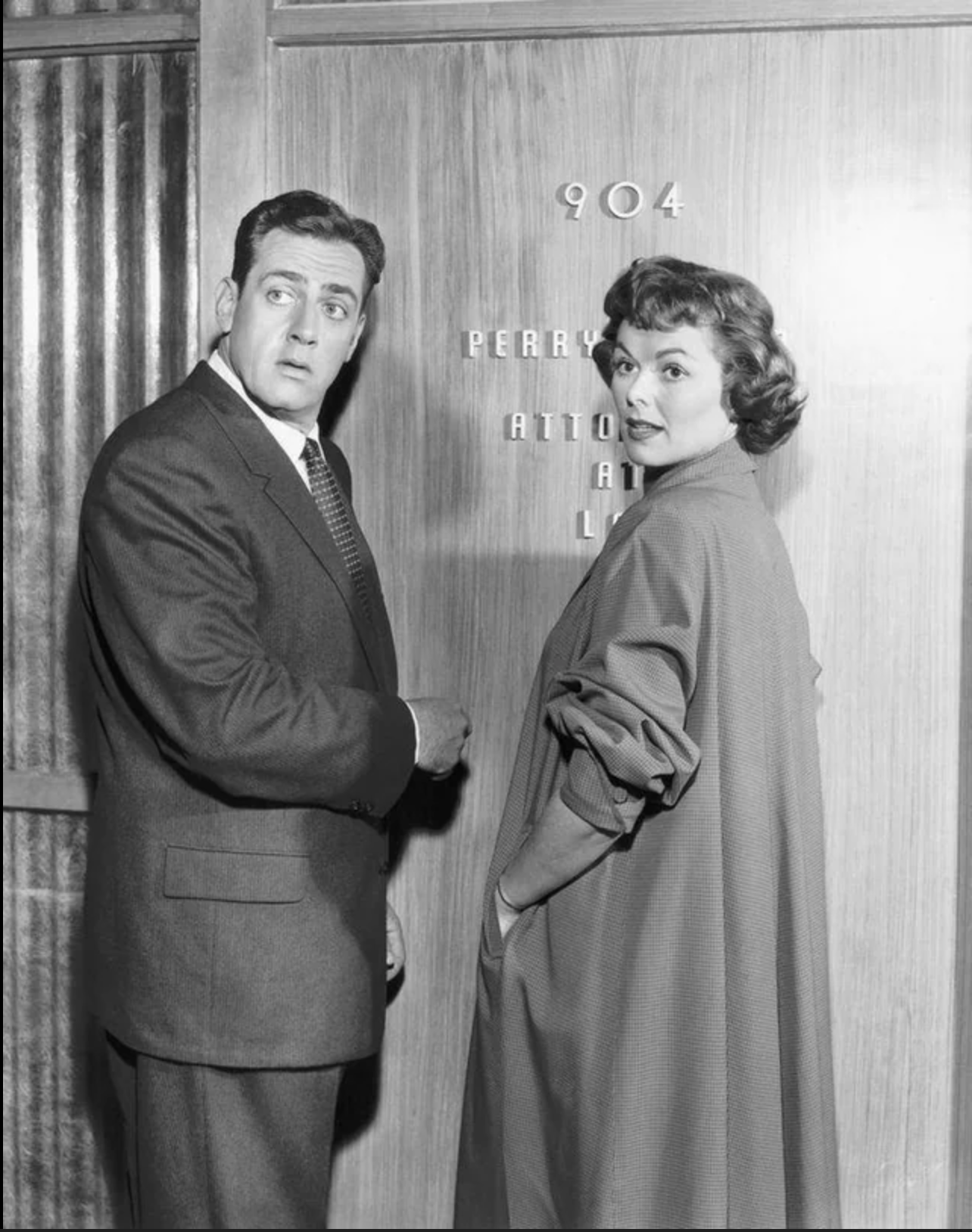
Every episode follows a tight formula: a crime, a wrongly accused client, and Mason’s relentless pursuit of truth. In a typical episode, the first half of the show introduces a client, who often hires Mason on non-murder related business, or becomes acquainted with him in some other way. (It always seemed odd to me that these people needed a lawyer for something superficial at the beginning and then needing him to defend them from a murder.) The prospective murder victim and other important figures in the case are introduced, and then the client is wrongly accused of murder. Mason has to stop his client from being questioned illegally by the police. He steps in and takes clients which to me often times felt as though it was more to shove it to Lt. Tragg and Prosecutor Burger.
Once the crime has been committed, while Tragg and Burger work to gather evidence against Mason’s innocent client, Mason, Paul Drake and Della Street engage in a parallel investigation in order to exonerate him or her. Some times it looks like both Mason and Drake are walking the line between law abiding citizens and breaking the law. You start to wonder if Mason is willing to do anything to prove that his clients are innocent but you also you wonder what sort of investigation the police and prosecution are doing.
In the second half, Mason and Burger spar in the courtroom. This usually takes place during the preliminary hearing because Mason’s technique is to clear a client before they are bound over for trial (based on novels). Jury trials are rarely seen, with “The Case of the Terrified Typist” being an exception. The show thrives on cross-examination drama, where Mason dismantles lies or misunderstandings with the testimonies up to this point.
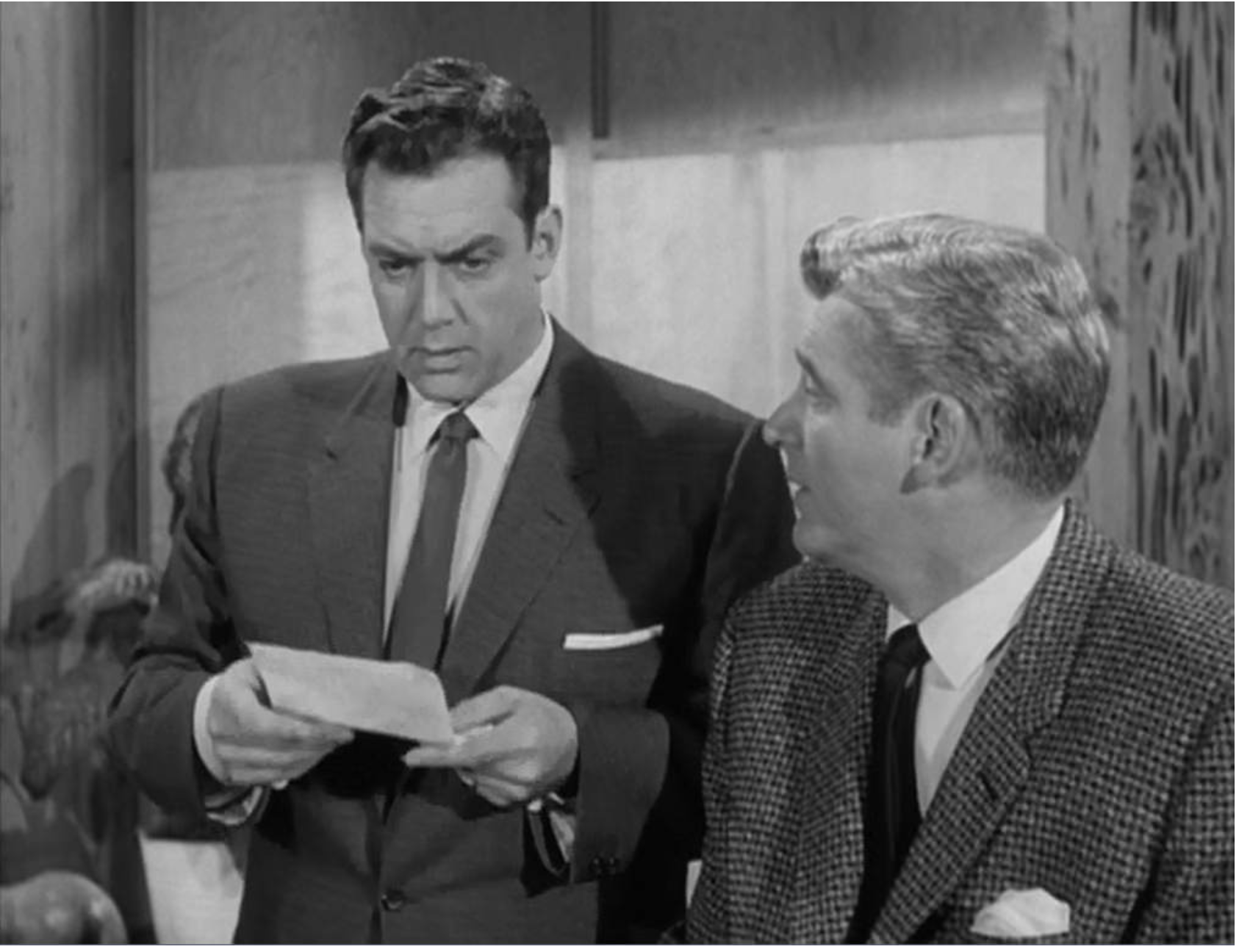
Eventually, some detail is uncovered, a different interpretation of the evidence is found, or a remark is made inside or outside the courtroom which gives Mason the clue he needs to discover the identity of the real murderer. Usually, armed with this new insight, Mason then usually embarks upon a line of questioning that reveals the surprise perpetrator, often causing them to break down and confess to the crime in the courtroom.
I am not sure if this works the same without Raymond Burr. His performance as a person trying to poke holes in the prosecutions case is the best. He is such a large, striking figure He has a way of looking like he doesn’t care for Lt. Tragg and Prosecutor Burger. It is almost like he feels that they are not as bright as he is and as the episodes go on it seems he may be right. This is a moral universe where truth always wins. It was both comforting and misleading. Crimes are rarely solved in an hour by the police and innocent people do go prison.
I get to watch it on Amazon Prime Video. They seem to have all the seasons and episodes and I enjoyed working through that during Covid. It did not disappoint. It was properly dramatic for that time, back in the day. And sometimes you just need that drama in your life. I am more shocked about how when I was a kid, how much went over my head. How Perry seems to do things that seem highly unethical and contrary to make sure he can get his client off. There are several instances where he investigates a crime scene before the police know that a crime has occurred or when he stumbles across evidence and drags his feet in listing that evidence and turning it over to the police.
Matlock
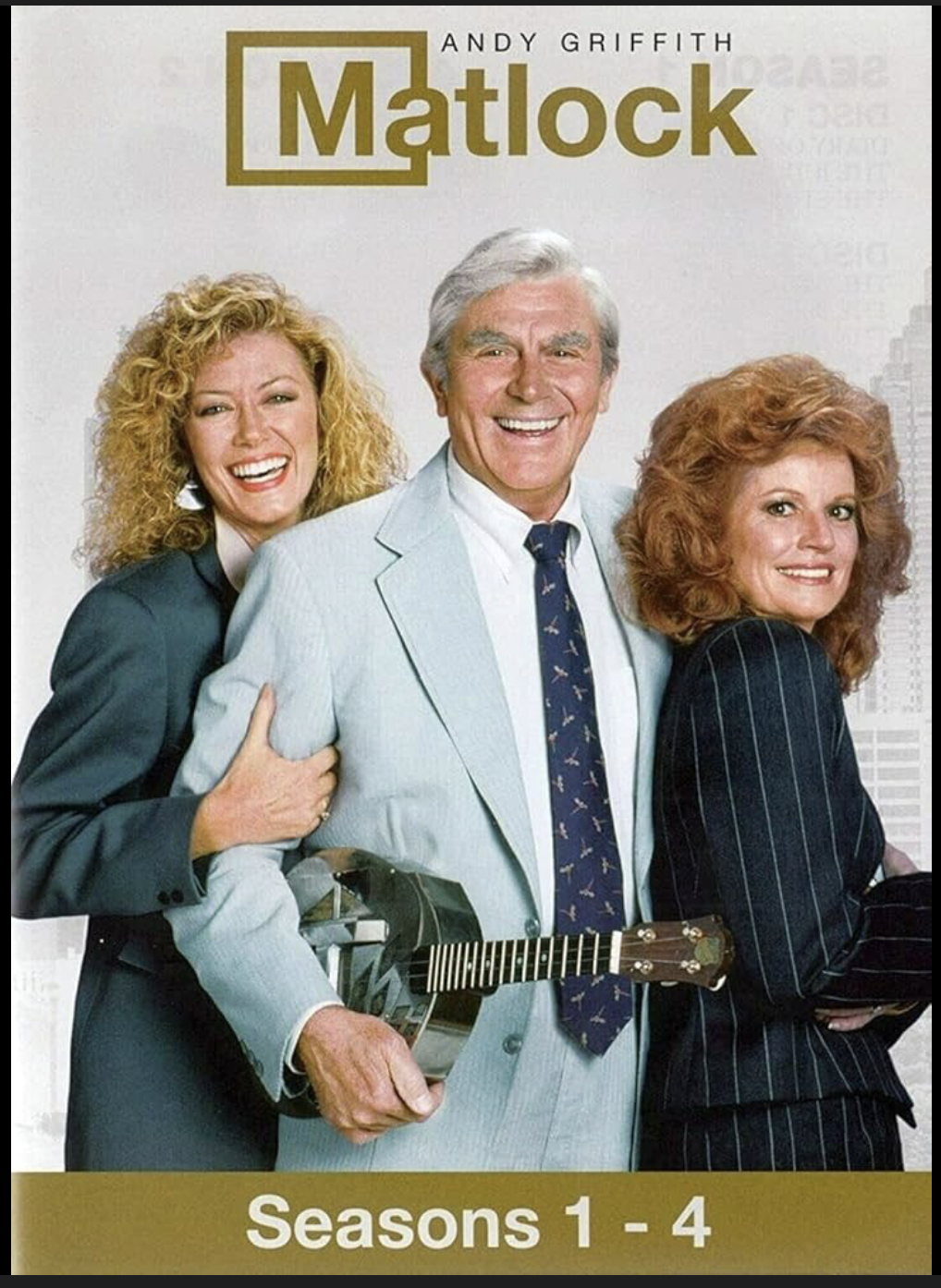
A little more of the same. Matlock is a mystery legal drama television series starring Andy Griffith in the title role of criminal defense attorney Ben Matlock. Many love the Andy Griffith Show but Matlock is my favorite. That may have something to do with my mother and grandmother loving Matlock and when I was home during the summer or winter breaks we watched these together. It was the height of the summer vacation to sit on the couch with my grandmother and watch Matlock. There wasn’t much that my grandmother couldn’t figure out. As a kid, I wondered if I was ever going to be able to identify the killer in the end like her. As an adult, I have a a bit more practiced at finding clues. Grandma would be proud.
Matlock’s show format is very similar to that of Perry Mason (both Matlock and the 1980s Perry Mason television films were created by Dean Hargrove), with Matlock identifying the perpetrators and then confronting them in dramatic courtroom scenes. Matlock has flair for the dramatic though. One difference was that Mason usually exculpated his clients at a pretrial hearing, Matlock usually secured an acquittal at trial from the jury. Matlock aired a total of 193 episodes across nine seasons and began with a TV movie. 12 two-hour episodes and 15 two-part episodes of the program were aired. Two parters were always my favorite. Gave me something to look forward to it.
Matlock centers on Ben Matlock, a widowed and highly respected defense attorney known for his sharp intellect, and cantankerous personality. Despite his gruff exterior, Matlock is deeply committed to justice. Most episodes end with a courtroom confrontation, where Matlock cross-examines a witness, and methodically exposes the truth. His goal is typically to establish reasonable doubt or to prove his client’s innocence outright.
Matlock often visits crime scenes to uncover overlooked evidence and develop alternative theories about the case, which usually involves homicide. That also means having a private investigator in Tyler or Conrad be his eyes and ears when he is not around. These two often go undercover for Matlock in various disguises to gather information although they have vastly different approaches to gathering information. Tyler was a stock market whiz Tyler Hudson and Conrad was a former North Carolina deputy sheriff.
A distinctive feature of Matlock’s character is his finicky fashion sense; he consistently wears a light gray suit and, over the series’ run, drives three successive generations of the all-gray Ford Crown Victoria. He could not be convinced to wear anything else. And with what he is charging his clients you think that he could get a better fit. Matlock typically charges a $100,000 retainer fee (equivalent to $240,000 in 2024), usually payable upfront. However, he often adjusts or waives his fee if he believes strongly in a client’s innocence or if the client cannot afford to pay. In some cases, he reluctantly accepts pro bono cases. He is making 6 figures a case in 1986 and still arguing with hot vendors about the price of hot dogs. It kills me when he has to travel to New York or LA because then his penny pinching gets even worse for comic relief no doubt.
Matlock being frugal is explored humorously (but always annoyed me because, I could definitely use 100K) in the season eight episode “The Diner”. An alternate backstory for his hot dog obsession is presented in a crossover with Diagnosis: Murder (season four, episodes 15–16, “Murder Two”), where Matlock blames Dr. Mark Sloan (Dick Van Dyke) for advising a failed investment in 8-track tapes in 1969 that cost him his $5,000 savings (equivalent to $33,000 in 2024), forcing him into an austere lifestyle which while hilarious still didn’t give me any real reason why a lawyer was arguing over hot dogs being $1.75.
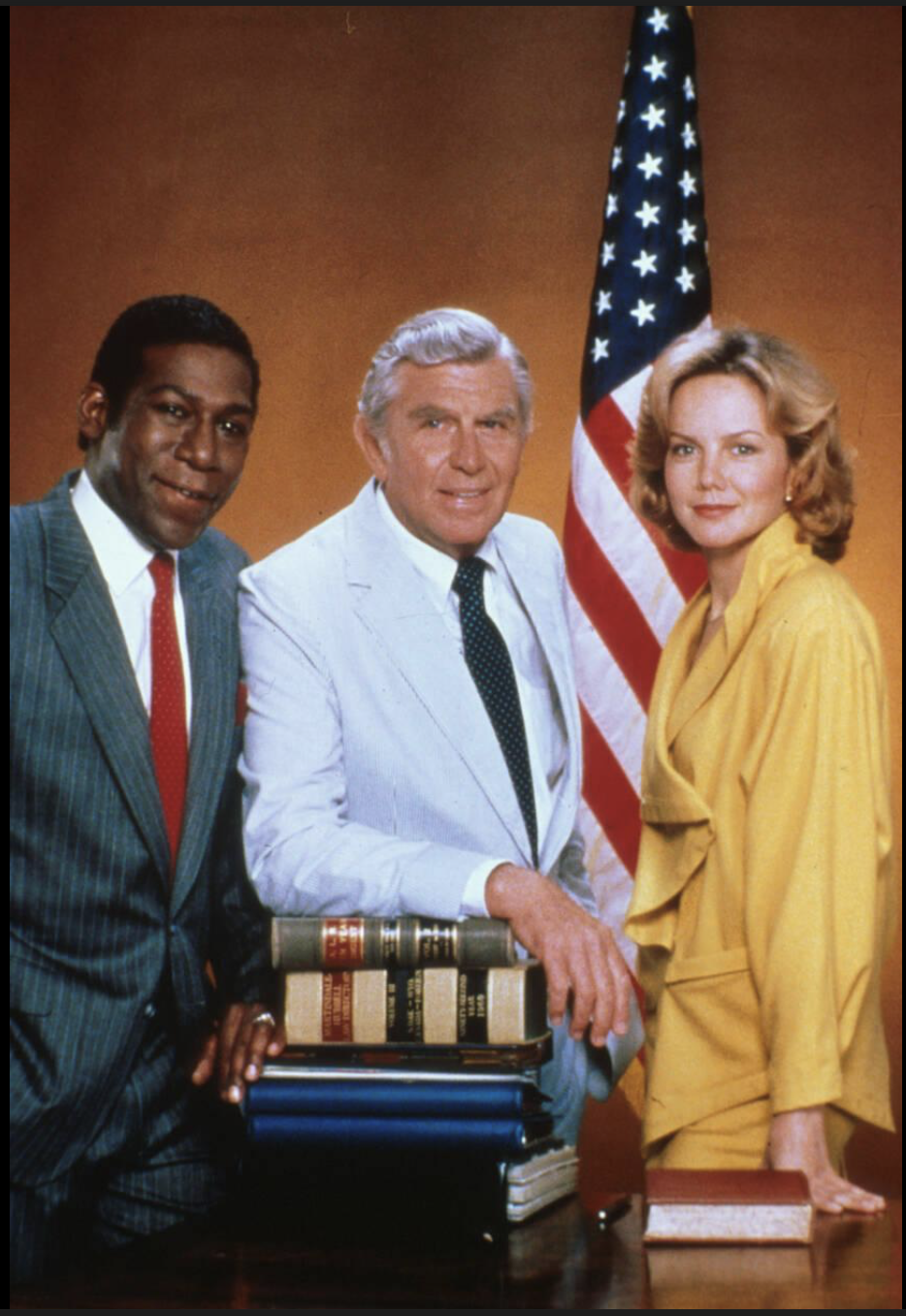
My favorite Episodes include
- The Judge – Season 1, Episode 1 – During a murder trial, Matlock thinks that the killer is in the courtroom, but isn’t the man sitting at the defense table – It is the Judge. Dick Van Dyke guest stars
- The Sisters – Season 1, Episode 7 – Two scheming sisters establish an alibi while framing their uncle for the murder of his wealthy wife.
- The Cop – Season 1, Episode 8 – Matlock defends a cop being framed for the murder of a mobster who had eluded arrest for years except it is not all it is cracked up to be when it is revealed to be an old friend
- The Chef – Season 1, Episode 12 – A cooking show hostess is charged with the on-camera murder of her ex-husband, a chef whose success came from stealing her recipes.
- The Umpire – Season 2, Episode 16 – When a softball ump calls his last strike, Matlock sorts through a team of suspects.
- The D.J.– Season 3, Episode 5 – When a softball ump calls his last strike, Matlock sorts through a team of suspects.
- The Other Woman – Season 3, Episode 11 – When a softball ump calls his last strike, Matlock sorts through a team of suspects.
- The Cult – Season 3, Episode 18 – Matlock believes in the innocence of a man whose brainwashed son insists he saw his father kill the leader of his cult.
- The Good Boy – Season 4, Episode 3 – When a smooth-talking son frames his mother for the murder of her husband, Matlock has to find a way to prove the “good boy” isn’t.
- The Cookie Monster – Season4, Episode 24 – Matlock investigates the murder of a cookie queen who was out to crumble her competitors with a hostile takeover.
Columbo
If there is something that the older people love, including me, it is Columbo. I have Amazon Prime, so I get to watch all the seasons at my own pace. It has been fun to watch these shows with my mother. Thank goodness they are Amazon Prime. My mother and I can’t seem to take some of the audacity of the characters that are committing crimes and trying to fool Columbo. It is always fun to try to piece together the crime not only before Columbo does but also before my mother does.
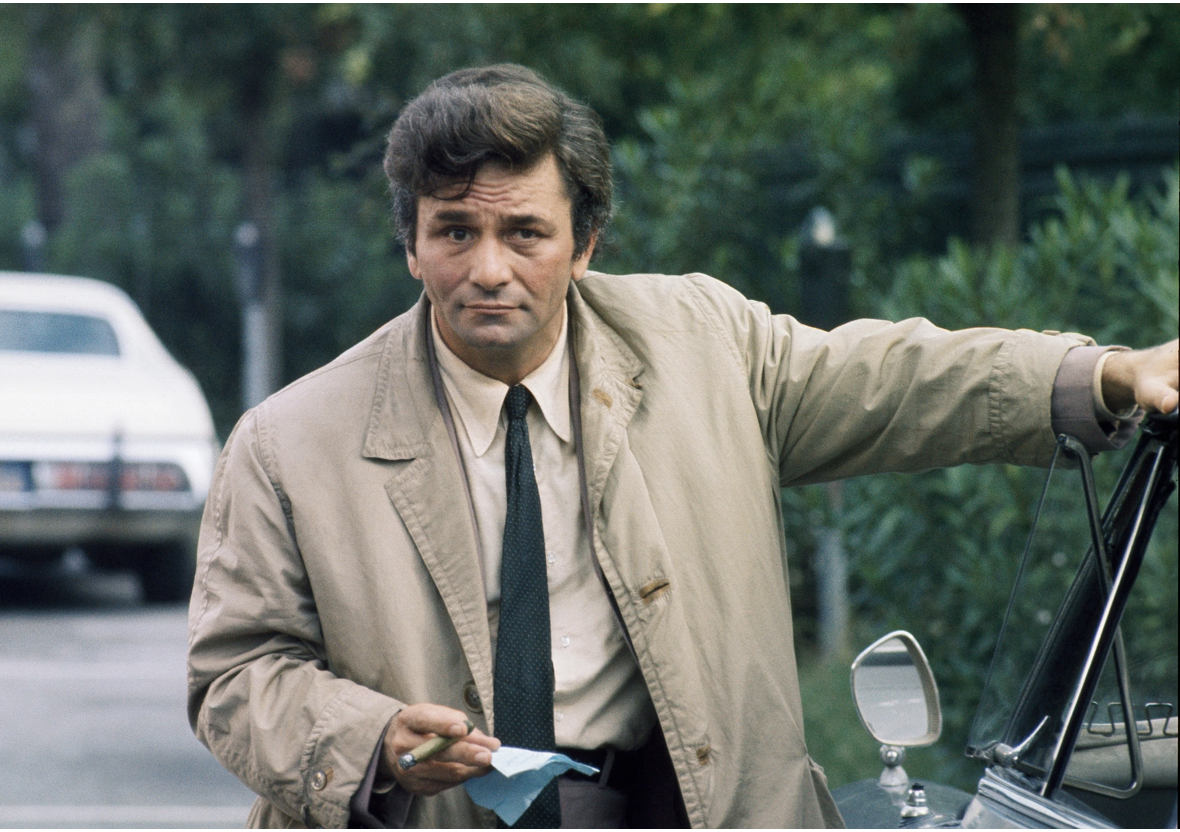
Columbo is a crime drama television series starring Peter Falk as Lieutenant Columbo, a homicide detective with the Los Angeles Police Department. I like to believe that Columbo and Perry Mason exist in the same universe. Except Columbo nabs actually criminals, and Mason exonerates the innocent. So maybe in the same universe but doing different jobs.

Columbo is a lot like Matlock in the way he has his trademarks including his rumpled beige raincoat, and somewhat unkempt hair. But that doesn’t stop him from getting his man. Columbo definitely uses his looks and peoples own misconceptions and superiority to his advantage. I see that D’onofrio got his cues from Peter Falk as Columbo. And now that I am watching this in its entirety, I can’t unsee it. My favorite is when leaves a room only to return with the catchphrase “Just one more thing” to ask a critical question. The series’ homicide suspects are often affluent members of high society. There are orchestra conductors, bestselling novelists, millionaire actors, cardiac surgeons. They all have had the rug pulled out from under them by Lieutenant Columbo. And I have to say that has been a joy to watch. Suspects carefully cover their tracks and are initially dismissive of Columbo’s apparent ineptitude. They become increasingly unsettled as his pestering behavior teases out incriminating evidence. His relentless approach often leads to self-incrimination or outright confession.
This genre begins by showing the commission of the crime and its perpetrator; the plots is no “whodunit” element of determining which of several suspects committed the crime unlike Matlock (In some cases in Matlock you did get to see the perpetrator in the beginning but for the most part, it is a whodunit.) It instead revolves around how a perpetrator known to the audience will finally be caught and exposed. This style of mystery is sometimes referred to as a “howcatchem”. The clues Columbo finds to help him solve the case are sometimes revealed to the audience beforehand, but often not until the episode’s end.
Question: What do we really know about Columbo? Not really anything. He has a wife who we never see, reminds me of Maris in Frasier. I noticed that he never uses his first name and his office is rarely glimpsed. It makes you wonder if this whole persona we see is just an act to lore the fly to the spider web? “My wife is a big fan” is a commonly said to the murderer by Columbo, but perhaps she doesn’t really exist? You wonder if Columbo can maintain a relationship with the way he works his cases. When Columbo first appears in an episode, his genius is hidden from the viewer by his frumpy, friendly, and disarming demeanor. It really leads the murderer to believe that he or she has it made. They swear they have outsmarted everyone. Columbo’s true thoughts and intentions are sometimes concealed until the end of the episode.
The great thing about how the episodes are set up, Columbo usually suspects the murderer within moments of their meeting, or even earlier, often based on their reaction to the news of the victim’s death. (It seems kind of funny.) The murderer, in turn, almost always immediately sees through Columbo’s scruffy and absent-minded manner to his underlying investigative intellect, and accordingly takes steps to divert his efforts by manipulating evidence, and witnesses, to lead Columbo towards a different suspect. Each episode is generally concluded with Columbo proving the killer’s guilt, though some episodes, go on to show the killer confessing or quietly submitting to arrest.
You know you have a hit on your hands when Sesame Street does a parody of it.
Murder, She Wrote
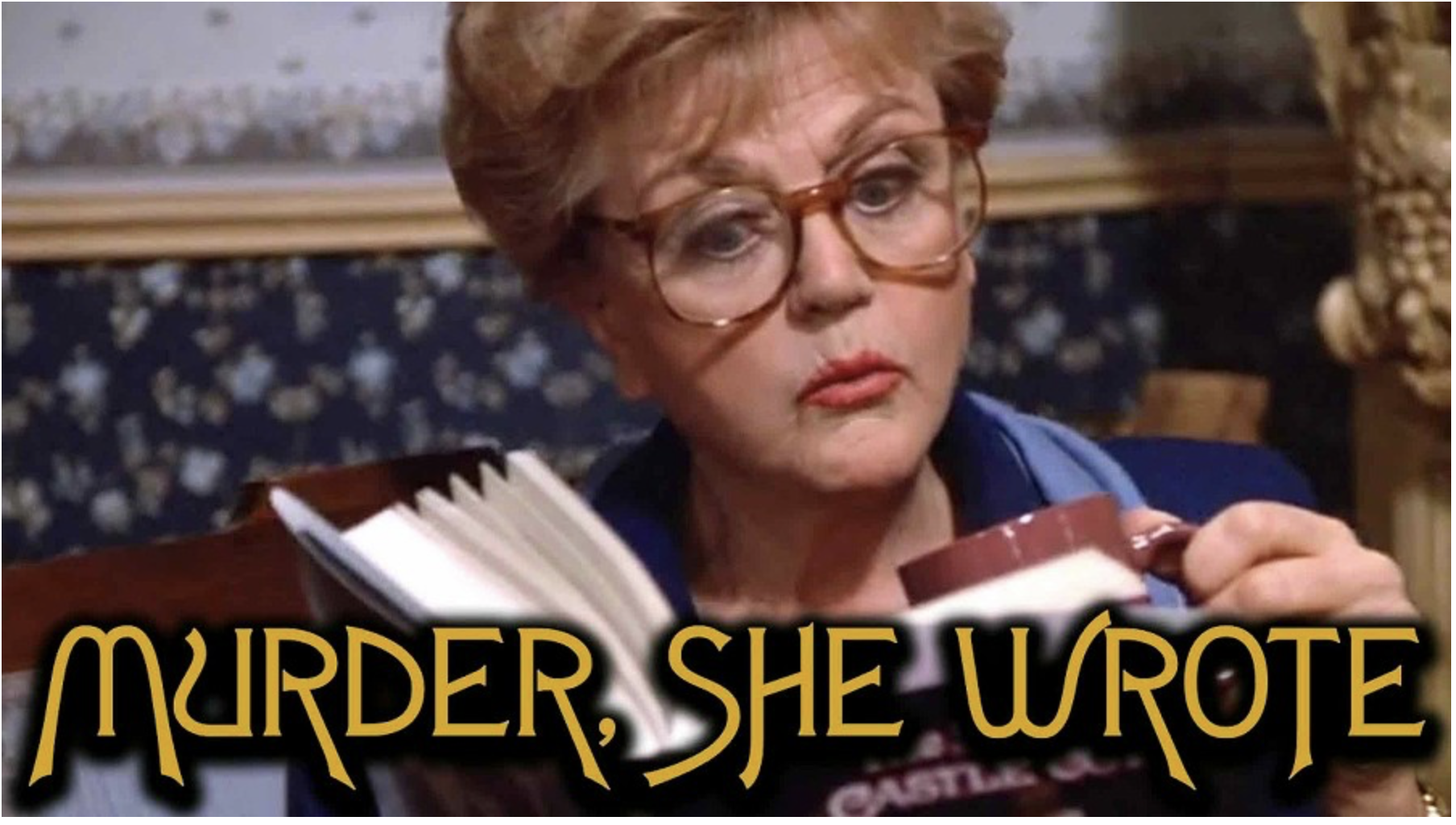
There is nothing that makes me feel more cozy than when the marathon of Murder, She Wrote is on. Jessica Fletcher. I often wonder how bad writers actually think police officers are at their jobs. Because this show seems to show the police not just in the small town of Cabot Cove but across the country in not the best light. So much so, that they need to be helped out by a mystery writer and retired English teacher.
Murder, She Wrote is a crime drama television series, starring Angela Lansbury. The series focuses on the life of Jessica Fletcher, a mystery writer, who becomes involved in solving murders that take place in the fictional town of Cabot Cove, Maine, as well as across the United States and abroad. Jessica proves more perceptive than the official investigators of a case, who are almost always willing to arrest the most likely suspect. They take the clues as they are and do not do any further interpretation. By carefully piecing the clues together and asking astute questions, Jessica leads the authorities to arrest the real murderer.

The show ran for 12 seasons from 1984 to 1996, for a total of 264 episodes.After the series finished in 1996, four television films were released from 1997 to 2003. It became one of the most successful and longest-running shows in TV history, averaging 25 million viewers per week at its peak.
The show revolves around the day-to-day life of Jessica Fletcher (née MacGill, which was Lansbury’s mother’s maiden name), a widowed and retired English teacher, who becomes a successful mystery writer. What is interesting, is in the first few episodes she is at a typewriter putting together her work. She doesn’t really have any thoughts on submitting it to an agent or getting the book published. It is her nephew who takes the works without her permission and submits it on her behalf. And the book is a hit.
Despite fame and fortune, which she never seems all that happy with , Jessica remains a resident of Cabot Cove, a small coastal community in Maine, and maintains her links with all of her old friends, never letting her success go to her head.
So much murder occurred with her vicinity that the term “Cabot Cove syndrome” was coined to describe the constant appearance of dead bodies in remote locations. And because Jennifer is usually there, many people have wondered if she could be the murderer. Specifically, if Cabot Cove existed in real life, it would top the FBI’s national crime statistics in numerous categories. Although, in the 12 years, just 54 episodes out of the total 264 take place in Cabot Cove.
Angela Lansbury as JB Fletcher is the heart of the show. There is nothing better than watching JB start out as “nosy busybody” in early episodes but eventually becomes known as an outstanding investigator even among police and FBI agents. The episodes, much like Matlock, Columbo, and Perry Mason, are formulaic. Each episode follows the same pattern: Firstly, Jessica arrives somewhere new. For example, New York for a book tour. Then, a murder occurs. Jessica usually has walked into the middle of some nonsense. Someone is always having a dispute. Throughout the investigation, she notices small inconsistencies that the police have overlooked. She makes her expertise known (that she got from her writing career.) and she takes over interviews with suspects using her old lady kindness and curiosity. It tends to work because people always tell you what you need to know. She pieces together the truth and then confronts the killer. The killer then confesses or is exposed.
Murder, She Wroteremains beloved because it’s comforting and low-stress. I know I can relax with JB Fletcher on in the background. The mysteries are clever but never too gruesome and it is fun to see which actor that I know shows up. It blend of cozy charm with sharp detective work. One would think they could solve a crime if they have ever read a murder mystery in their life time. It’s the perfect show for fans of classic mysteries, with gentle suspense, and character-driven storytelling.
Hunter
My great grandmother loved her some Hunter. It usually came on after Matlock so we usually sat down for at least two hours watching tv. Hunter is a police drama that originally aired from 1984 to 1991, running for 7 seasons and 153 episodes. The show was popular enough to spawn: Three reunion TV movies (1995, 2002, 2003)and a short-lived revival series in 2003.
It starred Fred Dryer as Detective Sergeant Rick Hunter and Stepfanie Kramer as Detective Sergeant Dee Dee McCall. Let me tell you she never missed an episode and there was no way that you could get the tv from her if it was on.

It’s a classic example of 80s/90s action‑mystery television. It’s more intense and street-level than cozy mysteries like Murder, She Wrote, but not as bleak as modern crime dramas. I would guess this is where NYPD Blue and Law and Order got their start.
Hunter is a plainclothes police detective in LA (a la “Dirty Harry”). Life has toughened him so that obviously means he will sometimes go to dangerous extremes to apprehend a criminal. (Borderline illegal…) Because of this he is in constant conflict with his straight arrow administrative officer, Lester Cain. Cain is a desk-bound officer who is more concerned with paperwork than with cleaning up the streets. You find out throughout the show that Rick Hunter is the son of a mobster, which makes other cops distrust him meaning you can see why no one really wants to partner with him and why he seems so harsh on crimes. He’s the archetype of the 80s action detective, and with Fred Dryer being an ex football player, he fits the part.
In comes Dee Dee McCall, the Brass Cupcake to the Maverick Cop.The great thing I found about Dee Dee (minus the 80’s hair) was the fact that she was Hunter’s equal and not sidekick. They were equally matched and paired well because they have similar styles. Their partnership is built on mutual respect, banter, and shared grit. It’s one of the earliest male–female cop duos portrayed as equals. And Thank God they weren’t turned into love interests.
I enjoyed the two sides of Los Angeles. It is often shown as glamorous, constantly sunshine, beaches and Hollywood, however that is just the surface. In reality, there is a lot of violence, corruption, moral decay. Hunter sees the city as it truly is; a place where justice is constantly under threat. The show suggests that beneath every thriving metropolis lies a hidden world of danger that only a few are willing to confront.
I loved Dee Dee’s cars. I knew I wanted something red like her back in the day, at least before I knew insurance companies charges your more for bright red cars or police cars pulled you over… or whatever my mother said. She drove a red and silver 1984 Dodge Daytona Turbo Z. Then starting with season three and on through season five, McCall drove a bright red 1987 Daytona Shelby Z. Maybe this is where my love of Shelbys came from.
Knight Rider 1982
My brother and I used to watch this all the time during our summers off. I will never forget our obsession with KITT. My brother is 5 years younger than me so I am sure most of the issue went right over our heads. But the car was so cool.
Knight Rider is an action crime drama television series created and ran from September 26, 1982, to April 4, 1986. The show stars David Hasselhoff as Michael Knight (which they helpfully tell you in the intro), a sleek and modern crime fighter assisted by KITT, an advanced, artificially intelligent, self-aware, and nearly indestructible car. Why don’t we have these? I would also fight crime.
For the life of me, it was shocking to know audiences of the time did not like it as much. But I doubt anyone could have liked it more than my brother and I at the time. The series received negative reviews from critics during its initial run, retrospective reviews have been more positive from audiences and critics alike. The series has received a cult following.
Self-made billionaire Wilton Knight rescues police Detective Lieutenant Michael Arthur Long after a near-fatal gunshot to the face, giving him a new face through plastic surgery and a new identity and name: Michael Knight. (I don’t as a kid I realized that he had gotten shot in the face. Not a very good police officer huh?)
Apparently, Wilton selects Michael to be the primary field agent in the pilot program of his public justice organization, the Foundation for Law and Government (FLAG). The other half of this pilot program is the Knight Industries Two Thousand (KITT), a heavily modified, technologically advanced Pontiac Firebird Trans Am. This car had everything that my young mind figured the future would have… Are we even close? No.

KITT’s main cybernetic processor was installed in a computer used by the US government. Wilton Knight envisioned a better use for the computer in FLAG’s crime-fighting crusade, so he installed the AI system into the vehicle. KITT is an advanced supercomputer on wheels. KITT to think, learn, communicate and interact with humans. He is also capable of independent thought and action. He has an ego that is easy to bruise and is very sensitive, but his personality is kind and dryly humorous. I was always a dry humor kid, I tried to model my humor behind it. It was the best foil for David Hasselhoff’s Michael Knight.
My brother and I got a kick out of KITT. And really what other reason would kids watch the show. We have spirited debated how many languages KITT could speak. It seems we were right. My brother was 6 at the time and concluded that because KITT was a computer he could speak any language. KITT’s primary spoken language is English; however, by accessing his language module, he can speak fluently in Spanish, French and other languages. The module can be adjusted, giving KITT different accents. Side Note: My brother and I got into many debates about KITT and all the things he could do. Can you imagine an 11 year old and a 6 year old arguing about a fictional car.
KITT vs KARR really did us in though. KARR (Knight Automated Roving Robot) is the name of an automated, prototype vehicle featured as a major antagonist of KITT. The KITT vs KARR episode had me and my brother on the edge of our seats.
KARR was originally designed by Wilton Knight and built by Knight Industries for military purposes for the Department of Defense. After the completion of the vehicle, the KARR processor was installed and activated. However, a programming error caused the computer to be unstable and potentially dangerous. (Now that I work with software, I have a better understanding of things now.) KARR was programmed for self-preservation, but this proved to be dangerous to the Foundation’s humanitarian interests. (Self preservation in a car… could be a good thing right? RIGHT???)
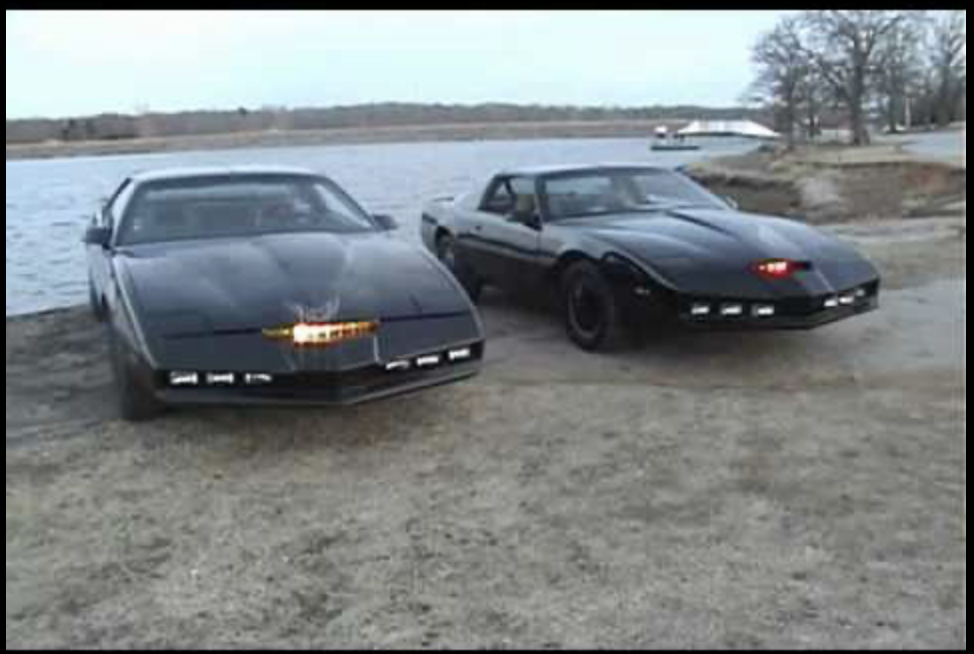
The project was suspended and KARR was stored until a solution could be found. Once KITT was constructed, it was presumed that his prototype KARR had been deactivated and dismantled. However, the latter did not occur and KARR was placed in storage and forgotten following the death of Wilton Knight. KARR was later unwittingly reactivated by thieves in the original episode Trust Doesn’t Rust, and was thought destroyed, but then reappeared in the episode K.I.T.T. vs. K.A.R.R and was seen to be finally destroyed by Michael and KITT.
Knight Rider has since become a cult classic. It’s the perfect blend of:
- 80s futurism
- Action‑adventure
- A mythic “lone hero” vibe
- A talking car with personality
- Episodic storytelling that’s easy to revisit

Agatha Christie’s Poirot
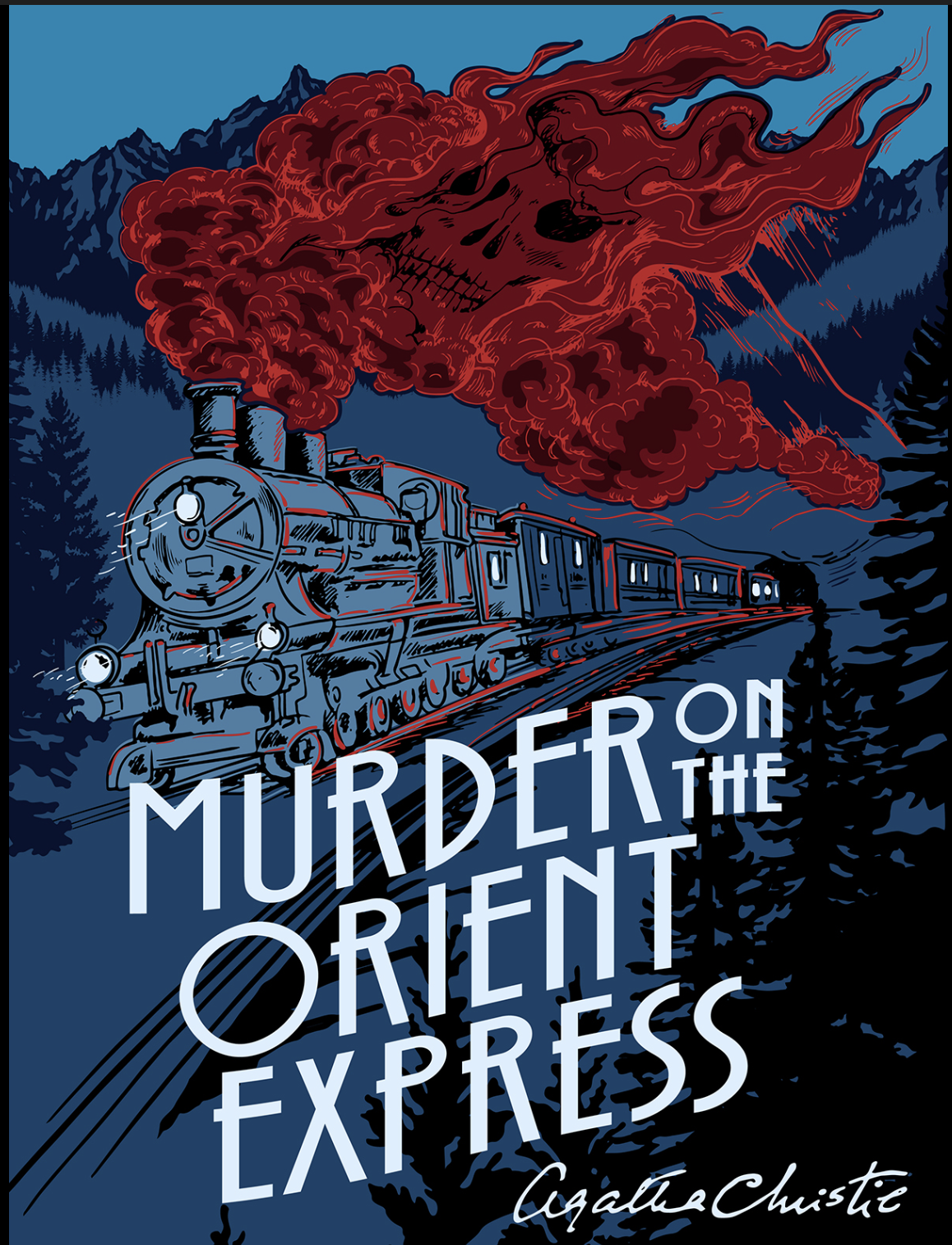
I know that I have a love of all things mystery and really Sherlock Holmes. I did not find out about Agatha Christie until much later. I have to say her Poirot was some of my favorites (including the ABC Murders, Murder on the Orient Express, and Death on the Nile.) Agatha Christie’s Poirot, or simply Poirot, is a British mystery drama television programme that aired on ITV from 1989 to 2013. The ITV show is based on one of Agatha Christie’s famous crime fiction series, which revolves around the fictional private investigator Hercule Poirot. Poirot is Christie’s most famous and longest-running character, appearing in 33 novels, two plays (Black Coffee and Alibi) and 51 short stories published between 1920 and 1975.
The program ran for 13 series (seasons in the USA) and 70 episodes in total. Each episode was adapted from a novel or short story by Christie that featured Poirot. At the end, the program finished with “Curtain: Poirot’s Last Case”, based on the 1975 novel of the same name. At the end of production, every major literary work by Christie that featured the title character had been adapted.
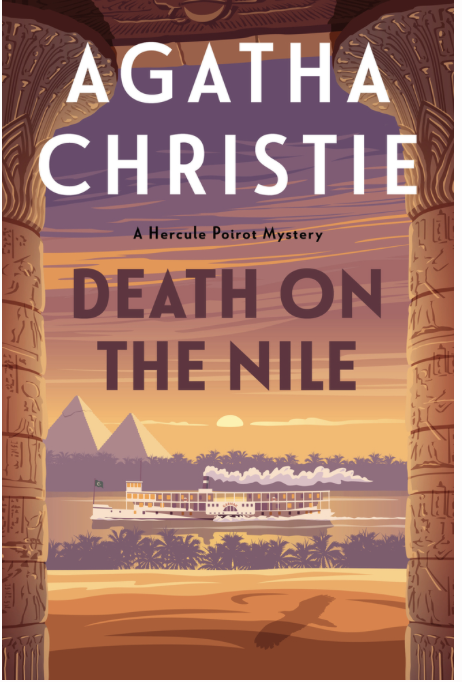

The great thing about the show was David Suchet’s portrayal of Hercule Poirot. Poirot’s biography is developed gradually across Christie’s works. He is introduced as a former Belgian police officer living in England as a refugee following the First World War. Poirot is portrayed as dignified, meticulous, and occasionally vain, traits that sometimes serve as comic devices but also reflect his precise and methodical approach to detection.
Poirot has become one of the most recognizable figures in detective fiction (behind Sherlock of course) and has been widely adapted in other media. He has been portrayed by numerous actors in film, television, stage, and radio.
My favorite episodes include:
- The A.B.C. Murders (Series 4, Episode 1)
- One, Two, Buckle My Show (Series 4, Episode 3)
- The Murder of Roger Ackroyd (Series 7, Episode 1)
- Murder in Mesopotamia (Series 8, Episode 2)
- Death on the Nile (Series 9, Episode 3)
- The Mystery on the Blue Train (Series 10, Episode 1)
- Murder on the Orient Express (Series 12, Episode 3)
- Dead Man’s Folly (Series 13, Episode Episode 3)
I noticed that over the years, there has been a tone shift in the shows. They start out in the earlier series being light, cozy, and almost whimsical. There were a lot comedic touches in the earlier seasons. These were mostly pulled from Christie’s short stories. They were straightforward whodunnits. The later series are darker and more psychological. These later series focus on themes of guilt, morality, and human weakness. I prefer the later seasons more because they are more faithful to Christie’s novels. This evolution keeps the series fresh while honoring Christie’s full range.


Poirot is a bit different when it went comes to solving the murder. Less like Sherlock Holmes. Poirot solves crimes using:
- The “little grey cells” — his intellect and psychological insight
- Observation of human behavior
- Understanding motive over physical clues
- Drawing-room reveals where he gathers suspects and explains the solution.
He is less action-oriented than detectives like Columbo or Hunter — his power is his mind. Sherlock like to get out into the thick of it and chases down criminals. He reminds me more of JB Fletcher.
The show aired in: the UK (ITV), Canada (VisionTV) and the US (PBS & A&E). It reached audiences in 200 countries and remains widely available on BritBox, PBS Masterpiece, and ITVX.
Agatha Christie’s Marple/Miss Marple
While I did enjoy Poirot, Miss Marple is by far my favorite. I think that maybe I have a love for the little old lady detective. There are two tv major television versions of Miss Marple:
- BBC’s Miss Marple (1984–1992) starring Joan Hickson
- ITV’s Agatha Christie’s Marple (2004–2013) starring Geraldine McEwan and later Julia McKenzie
Both portray the same character, an elderly spinster from St. Mary Mead with a razor‑sharp mind but they differ in tone, style, and faithfulness to Christie’s work.
In ITV’s versions, the title character was played by Geraldine McEwan from the first to the third series, until her retirement from the role, and by Julia McKenzie from the fourth series onwards. Unlike the counterpart TV series Agatha Christie’s Poirot, the show took many liberties with Christie’s works, most notably adding Miss Marple’s character to the adaptations of novels in which she never appeared.

Let’s start with the BBC adaptation with Joan Hickson. This series adapted all twelve original Miss Marple novels exactly as written which made this a fun watch. Joan Hickson was in her 80’s during filming and is widely considered the most faithful portrayal of Miss Marple. I think I read that Christie herself once wrote to Hickson saying she hoped she would one day play Miss Marple how true that is, I am unsure. Agatha Christie had never been very happy with most filmed adaptations of her works, and according to her grandson Mathew Prichard, who handled her estate after her death, she “did not care much for television”, either. The BBC secured rights to all the novels and produced them with great care and period accuracy; they were a joy to watch. Thank goodness they are 90 minutes each.
These episodes were a slow-burn, and deeply atmospheric. There was an emphasis on psychology, gossip networks, and village life. Hickson’s Marple is both observant, and deceptively sharp.It’s the closest you can get to reading the novels on screen; elegant, restrained, and brilliantly acted.

My favorite episodes include
- The Body in the Library, Episode 1.
- A Murder is Announced, Episode 3.
- The Sleeping Murder, Episode 6.
- At Bertram’s Motel, Episode 7.
- 4.50 to Paddington, Episode 9.
For the ITV version, Agatha Christie’s Marple follows the adventures of Miss Jane Marple, an elderly woman living in the quiet little village of St. Mary Mead. During her many visits to friends and relatives in other villages (and sometimes when simply being at home), Miss Marple often stumbles upon or hears about mysterious murders, which she helps solve. Just like with JB Fletcher, she isn’t always well received by the police but her reputation and unparalleled powers of observation eventually win them over.
The first six episodes were all adaptations of Miss Marple novels by Christie. But the next episodes ere derived both from works featuring Miss Marple but also Christie novels that did not feature the character.
My favorite episodes of this one include: (these will repeat a bit…)
- 4:50 to Paddington – Series 1, Episode 3
- A Murder is Announced – Series 1, Episode 4
- The Sleeping Murder – Series 2, Episode 1
- At Bertram’s Motel – Series 3, Episode 1
- Nemesis – Series 3, Episode 4
- Murder is Easy, – Series 4, Episode 2
- The Pale Horse – Series 5, Episode 1
Conclusion
At the end of the day, what I believe unites shows like Perry Mason, Matlock, Columbo, Murder, She Wrote, Hunter, Knight Rider, Poirot, and Miss Marple isn’t just their mysteries; it’s the way each show carved out its own corner of comfort, curiosity, and character‑driven storytelling. The English Major in me loves piecing together a mystery, and all of these shows give me a chance to flex my analytical muscles. These series didn’t rely on shock value or spectacle. They trusted the audience to appreciate sharp minds, moral clarity, and the thrill of watching someone piece together the truth one clue at a time.
Whether it’s Mason’s courtroom brilliance, Columbo’s disarming persistence, Jessica Fletcher’s small‑town intuition, or Poirot’s meticulous order, each detective reflects a different facet of why we return to mysteries in the first place. They remind us that intelligence can be heroic, that justice can be personal, and that even in a chaotic world, patterns can be found and wrongs can be righted. More or less. Revisiting these shows isn’t just nostalgia; it’s about reconnecting with a storytelling tradition that shaped how I think about heroes, puzzles, and the quiet satisfaction of a case well solved.
 JDenise's Thoughts & Rants
Leave a comment